
Why the Cheapest Contractor Often Becomes the Most Expensive
The “Good, Fast, Cheap” Rule Every Property Manager Should Understand
There is an old saying in project management:
“Good. Fast. Cheap. Choose any two.”
It has been around for decades because, more often than not, it proves to be true.
Whether you’re managing a commercial office building, shopping centre, industrial facility or strata complex, you’ll regularly engage contractors for maintenance, repairs, upgrades and capital works.
Air conditioning.
Electrical services.
Fire protection.
Hydraulic services.
Building Management Systems (BMS).
Security.
Painting.
Roofing.
Landscaping.
Sooner or later, you’ll request several quotations for the same scope of work.
Then it happens.
Four prices arrive that are all reasonably close… and one contractor submits a price that’s 25–30% lower than everyone else.
It immediately grabs your attention.

Subtitle for This Block
Title for This Block
Text for This Block
Is the Cheapest Quote Really a Bargain?
Imagine you’ve budgeted around $800,000 for a mechanical services upgrade.
Four contractors submit prices between $780,000 and $840,000.
One submits a price of $560,000.
Naturally, you investigate.
You review the exclusions.
You compare the specifications.
You check the proposed equipment.
You interview the contractor.
Everything appears reasonable.
So where does the saving come from?
That’s the question every property manager should ask.
Because if every contractor has priced the same specification, using similar products and labour, somebody has to absorb that missing 30%.
Where Does the Money Go?
Sometimes there is a genuine reason.
Perhaps the contractor has spare labour available.
Perhaps they secured better supplier pricing.
Perhaps they genuinely operate more efficiently.
But often, the savings appear somewhere else during the project.
For example:
- Reduced supervision on site
- Less experienced tradespeople
- Lower quality materials
- Missing documentation
- Poor commissioning
- Inadequate testing
- Delayed programming
- Variation claims after the contract is awarded
- Rushed workmanship
- Reduced quality assurance
None of these are obvious on the day the quotation is accepted.
Most appear weeks or months later.
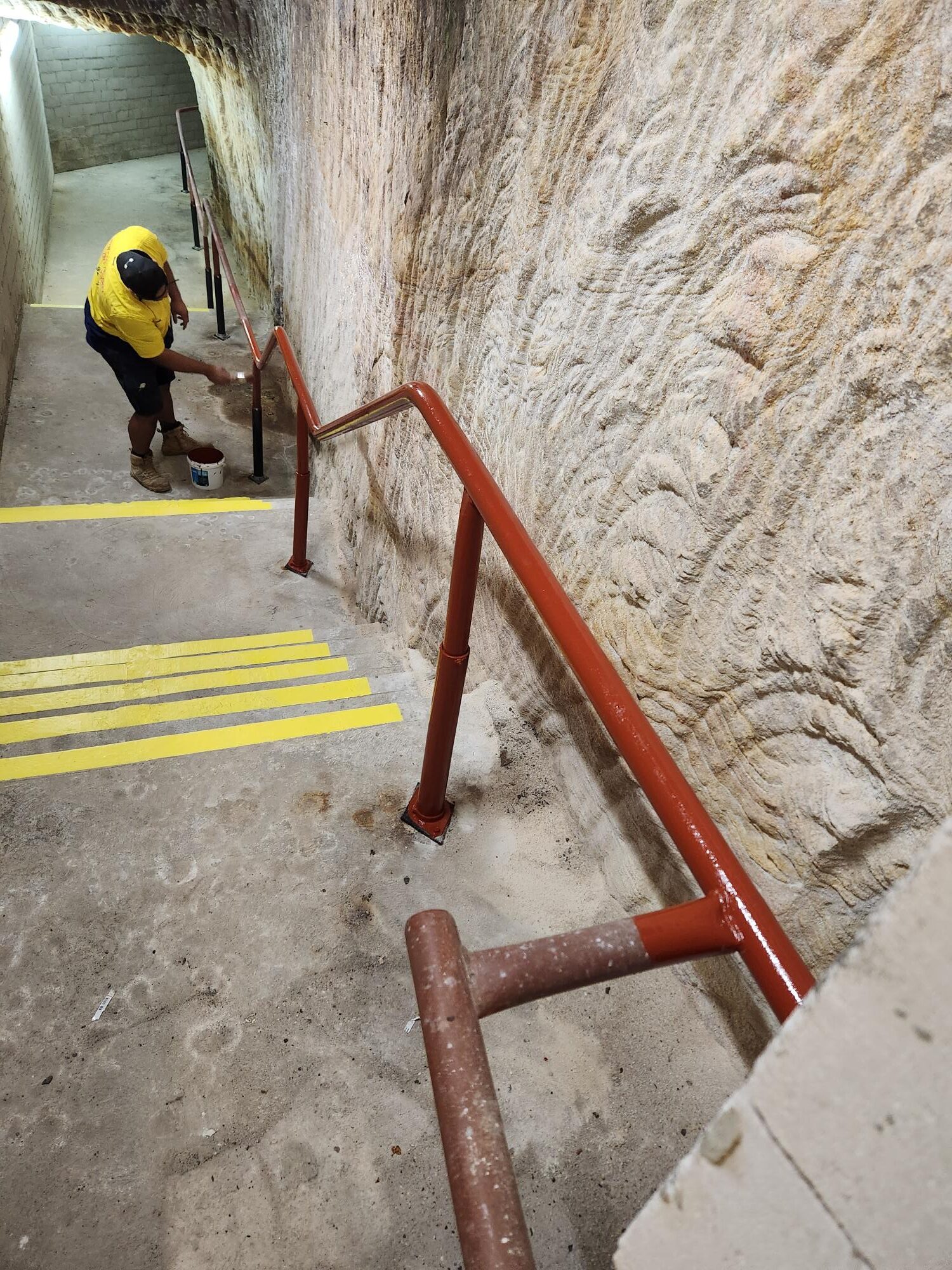
We’ve Seen It Happen
Over the years we’ve seen projects where the “cheapest” contractor eventually created problems such as:
- Safety documentation arriving late or incomplete
- Functional descriptions and as-built drawings missing
- Poor commissioning resulting in ongoing defects
- Suppliers refusing to deliver materials due to unpaid accounts
- Subcontractors leaving site because they hadn’t been paid
- Non-compliance with specifications
- Excessive variation claims
- Out-of-hours work restrictions ignored
- Completion dates slipping by several weeks
The original saving quickly disappeared.
Instead of managing one project, the property manager ended up managing disputes, delays, defects and unhappy stakeholders.
The Hidden Costs Nobody Budgets For
The contract price is only one cost.
There are also indirect costs that rarely appear in a tender comparison:
- Additional project management time
- More consultant meetings
- Delayed occupancy
- Tenant disruption
- Increased administration
- Repeat site inspections
- Contractor disputes
- Delayed defect rectification
- Reputational risk
When these costs are considered, the cheapest quote can easily become the most expensive option.
Price Should Never Be the Only Decision
A good contractor should offer more than a competitive price.
They should also demonstrate:
- Relevant experience
- Financial stability
- Qualified staff
- Appropriate insurances
- Strong safety systems
- Quality documentation
- Clear communication
- A proven history of delivering similar projects
These factors reduce risk long before work begins.
The Best Value Isn’t Always the Lowest Price
At Performance Facility Management, we encourage clients to look beyond the bottom line.
The objective isn’t to appoint the cheapest contractor.
It’s to appoint the contractor who offers the best value, delivers quality work, communicates well, completes the project safely and finishes on time.
Sometimes that contractor is also the lowest price.
Often they are not.
A slightly higher quotation from a capable contractor is frequently far less expensive than months of delays, defects and contract disputes.
In commercial property, choosing the right contractor isn’t simply about today’s budget.
It’s about protecting the long-term performance of the building, your reputation and your client’s investment.
Final Thought
The next time you receive a quotation that’s dramatically lower than every other tender, don’t immediately ask, “How much will we save?”
Instead ask:
“Where has the saving come from?”
The answer to that question may determine whether your next project is remembered as a success—or as a lesson learned.
Estimated reading time: 5 minutes