
Estimated reading time: 16 minutes
Scope Development, Tenders & Contractor Selection
Good Projects Begin With Good Information
The most successful commercial building projects begin with a thorough understanding of the building before a single contractor is invited to tender.
While new buildings are generally constructed from current documentation, existing commercial buildings often tell a very different story. Over years or even decades, buildings evolve through multiple refurbishments, tenancy fit-outs, equipment replacements, emergency repairs and undocumented modifications. Original drawings may no longer reflect the building as it exists today, asset registers may be incomplete, and many services are often found to have been altered without the documentation ever being updated. These unknowns are where many project risks begin.
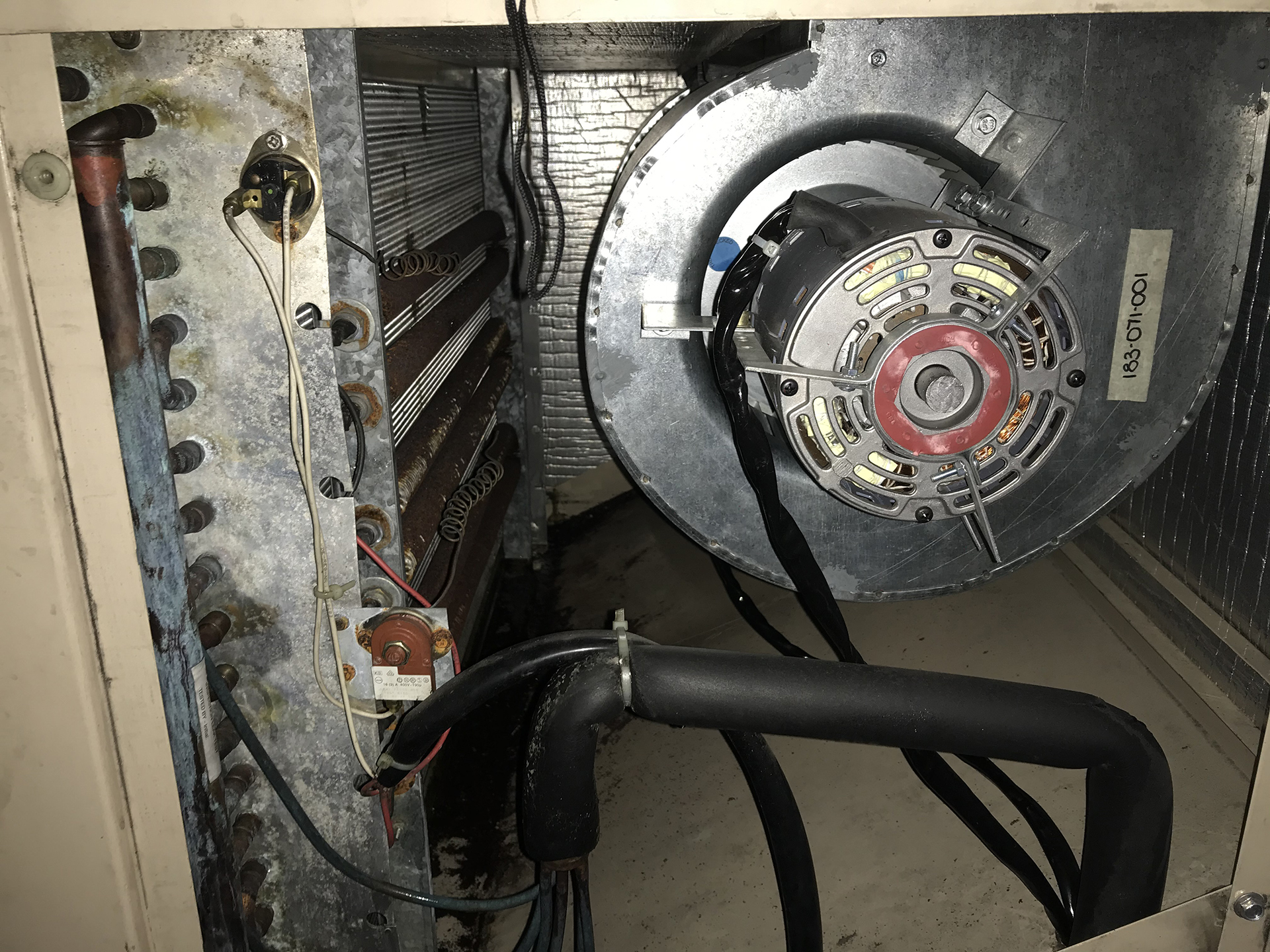
At Performance Facility Management, we specialise in working with existing, occupied commercial buildings, particularly B, C and D Grade commercial properties and buildings that are more than ten years old. These buildings often present unique challenges that cannot be identified from drawings or specifications alone. Hidden services, obsolete equipment, undocumented alterations, access restrictions, ageing infrastructure and operational constraints all influence how a project should be planned and delivered.
Our technical background across electrical services, HVAC, building automation systems, fire protection, essential services and facility management enables us to investigate the building before the project begins. We take the time to understand how the building actually operates, not simply how it was originally designed.
Just as importantly, we recognise that no investigation can uncover every hidden condition before work commences. Existing buildings have a way of revealing surprises once ceilings are opened, plant is isolated or obsolete equipment is exposed. Rather than ignoring these discoveries or allowing contractors to manage them without review, we believe they should be dealt with openly and professionally.
If previously unknown conditions are identified during the planning or tender process, we are not too proud to revisit the scope of works, revise tender documentation where necessary and ensure all tenderers are pricing the same information. In many cases, taking the time to issue an amended tender or clarification before contracts are awarded is far less costly than dealing with significant variations, disputes or delays after construction has commenced.
Our objective is not simply to produce a tender document—it is to ensure the project starts with the most accurate information reasonably available. By investing additional effort at the beginning of the project, we help improve pricing accuracy, reduce commercial risk and provide owners with greater confidence before committing significant capital expenditure.
Every Building Is Different
No two commercial buildings are ever the same.
Even two buildings constructed from identical drawings can operate very differently after ten or twenty years of occupation. Over time, commercial buildings evolve through multiple refurbishments, tenancy fit-outs, equipment replacements, emergency repairs, changes in legislation, evolving tenant requirements and countless operational decisions made by contractors, building managers and owners. As a result, the building that exists today is often very different from the building originally designed.
Drawings may no longer be accurate, equipment may have been replaced with different manufacturers, building services may have been extended to suit new tenants, control strategies may have been modified over many years and undocumented alterations may have become part of the building’s everyday operation. For this reason, we believe successful projects begin with understanding the building as it exists today—not simply relying on historical documentation.
RSometimes the Building Needs to Be Investigated Before the Project Can Be Defined
On many existing commercial buildings, particularly B, C and D Grade assets or buildings more than ten years old, the information required to prepare an accurate tender simply may not exist.
Rather than making assumptions, we may recommend undertaking targeted investigations before developing the project scope. Depending on the nature of the proposed works, this may include technical inspections, asset verification, operational reviews, condition assessments or independent building services audits.
In many cases, this early investigation identifies issues that fundamentally change the project scope, allowing them to be addressed before contractors prepare their quotations rather than becoming expensive variations later.
We don’t investigate a building because we expect to find problems—we investigate it because we don’t want our clients paying to discover them after the contract has been signed.
The cost of discovering a problem before the tender process is almost always significantly less than discovering it after contracts have been awarded.
CiFunctional Testing Often Reveals What Drawings Never Will
Some building systems cannot be properly understood by visual inspection alone.
Mechanical services, electrical infrastructure, fire protection systems, building management systems, emergency power systems and vertical transportation often require structured functional testing to determine how they actually perform under operating conditions.
A system may appear complete on paper while critical functions have been disabled, bypassed or are no longer operating as originally intended. Functional testing can identify issues such as:
- equipment that has been manually overridden
- automatic sequences that no longer operate correctly
- obsolete control strategies
- partially functioning systems
- hidden dependencies between building services
- equipment operating outside its original design intent
- deficiencies that only become apparent during real operating conditions
Identifying these issues before tender documentation is prepared enables projects to be properly defined, reduces uncertainty and gives contractors a much clearer understanding of the work being priced.
CMaintenance History Can Be Just As Valuable As Physical Inspections
One of the most valuable sources of project information is often hidden within the building’s maintenance records. Corrective maintenance reports frequently identify recurring faults, equipment reliability issues, temporary repairs, recurring call-outs and operational problems that may not be visible during a single site inspection.
Similarly, planned preventative maintenance records can reveal trends in equipment condition, recurring recommendations from service contractors, components approaching the end of their service life and systems requiring increasing levels of maintenance intervention.
These historical records often tell the story of how a building has been performing over many years rather than simply how it appears on the day of inspection.
Reviewing this information allows project scopes to be based on operational evidence rather than assumptions.
Building Services Audits Can Reduce Project Risk
For larger projects or buildings with ageing infrastructure, we may recommend undertaking independent building services audits before preparing tender documentation. Depending on the project, these may include:
- HVAC mechanical services audits
- electrical infrastructure audits
- fire protection systems audits
- lift and vertical transportation reviews
- building management system (BMS) audits
- energy performance assessments
- compliance reviews
- asset condition assessments
These investigations help establish a reliable technical baseline, identify hidden risks, confirm existing system performance and ensure project documentation reflects the actual condition of the building rather than relying on assumptions or outdated records.
By understanding the building first, owners are able to make more informed investment decisions, contractors can prepare more accurate tenders and projects commence with a far greater level of certainty.
CBuilding Knowledge Reduces Commercial Risk
Every investigation undertaken before a project is tendered adds to the owner’s understanding of the building.
While no consultant can eliminate every unknown within an existing commercial building, investing time to understand the building before preparing tender documents significantly reduces technical, operational and commercial risk.
It also creates a stronger foundation for fair contractor pricing, more meaningful tender comparisons, fewer variations during construction and better project outcomes from planning through to commissioning and handover.

Developing a Scope That Contractors Can Actually Price
Preparing a scope of works is not simply writing a list of tasks. In existing commercial buildings, particularly occupied buildings, the scope must anticipate how the work will be delivered as much as what work is to be undertaken.
Every project has technical, operational and commercial constraints that influence contractor pricing and ultimately determine whether the project proceeds smoothly or becomes a series of unexpected variations and delays.
Our objective is to develop tender documentation that answers as many contractor questions as possible before the tender is released. The fewer assumptions contractors need to make, the more consistent and reliable their quotations become.
Understanding How the Building Must Continue to Operate
Unlike new construction, most commercial building projects occur while the building continues operating.
Tenants still require air conditioning, lifts continue transporting occupants, fire systems remain operational, deliveries continue, cleaning contractors work around the clock and building managers must continue supporting everyday operations. A well-developed scope recognises these operational realities.
Before preparing tender documentation, we consider questions such as:
- Can the building remain occupied while the work is undertaken?
- Are shutdowns required?
- Can shutdowns occur during business hours?
- Are temporary services required?
- How will tenants be notified?
- Does the work affect critical infrastructure?
- Are authority approvals required?
- Is after-hours work necessary?
- Will noise or dust restrictions apply?
- Are there seasonal constraints for HVAC works?
These considerations are often overlooked early in the project, yet they frequently become the source of delays and additional costs once construction begins.
Defining Project Deliverables and Acceptance Criteria
One of the most common causes of disagreement on commercial building projects is not the quality of the work itself—it is differing expectations about what the contractor is required to deliver.
A contractor may believe the project is complete once the equipment has been installed and energised. The building owner, however, may reasonably expect that the system has been fully commissioned, integrated with existing building services, documented, tested, demonstrated, and handed over in a condition that allows the building to continue operating effectively.
These expectations should never be left to interpretation.
As part of developing the scope of works, we help define the project’s technical and operational deliverables before the tender is released. Depending on the project, this may include commissioning requirements, witness testing, performance verification, system integration, operator training, asset information, software backups, maintenance documentation, warranties, as-built drawings and clearly defined acceptance criteria.
By establishing these requirements early, contractors understand exactly what is expected, tender submissions become more consistent and owners have a clear basis for assessing whether contractual obligations have been met.
Importantly, we recognise that Practical Completion is only one milestone in the lifecycle of a successful project. Long-term operational performance depends on effective commissioning, structured handover, documentation, training, defect rectification and ongoing optimisation after the project has been occupied.
Reducing Assumptions Through Better Investigation
Every commercial building project contains assumptions. On existing buildings, it is simply not possible to investigate every concealed service, verify every historical modification or predict every condition that may be discovered once construction commences. Anyone who suggests otherwise is setting unrealistic expectations.
Our objective is not to eliminate every unknown—it is to identify as many as reasonably possible before contractors prepare their quotations.
This begins with understanding the building itself. Depending on the project, this may involve reviewing existing documentation, inspecting building services, examining maintenance histories, undertaking targeted audits, performing functional testing or discussing recurring operational issues with building managers and maintenance contractors. Each piece of information helps replace an assumption with evidence.
Where assumptions cannot reasonably be eliminated, they should be identified and managed openly within the tender documentation. This provides greater transparency for both the client and the tendering contractors, reducing the likelihood of misunderstandings once work begins.
In some cases, investigations uncover information that materially changes the project. When this occurs, we believe it is better to pause, review the findings and, where appropriate, revise the scope of works or reissue tender documentation before contracts are awarded. While this may add time during the planning stage, it often prevents significantly greater costs, disputes and delays during construction.
Ultimately, successful project planning is not about pretending every unknown can be discovered in advance. It is about making informed decisions based on the best information reasonably available at the time, documenting any remaining uncertainties and ensuring that owners understand the associated risks before committing to the project.
Existing buildings will always contain unknowns. Our responsibility is to ensure those unknowns are minimised, clearly understood and managed before they become unnecessary commercial risks.
Better Tender Documents Deliver Better Outcomes
The quality of a tender process is largely determined before the first contractor is invited to submit a quotation.
Tender documentation should do far more than describe the work to be undertaken. It should provide contractors with sufficient technical, operational and commercial information to understand the building, the project objectives and the conditions under which the work must be delivered.
The more complete the information provided, the fewer assumptions contractors are forced to make and the more reliable their pricing becomes.
Our objective is not simply to obtain competitive quotations—it is to obtain quotations that can be fairly compared and properly evaluated.
Like-for-Like Comparisons
One of the biggest challenges in commercial procurement is comparing quotations that appear similar but have been prepared using completely different assumptions.
For example, one contractor may include commissioning while another assumes it will be undertaken by others. One contractor may include temporary air conditioning during a shutdown, while another assumes the building can simply operate without cooling. One contractor may allow for replacing obsolete control cabling, while another assumes the existing infrastructure can be reused.
On paper, each contractor has tendered for the same project. In reality, they may be pricing significantly different scopes of work.
This often results in owners selecting what appears to be the most competitive proposal, only to discover later that important items were never included.
Reducing Commercial Uncertainty
Every unanswered question within a tender document creates commercial uncertainty.
Contractors generally respond to uncertainty in one of three ways.
Some include significant contingencies to protect themselves against unknown risks.
Some make assumptions that may not reflect the client’s expectations.
Others deliberately exclude uncertain items altogether, expecting they will become variations if discovered during construction.
None of these outcomes assists the client.
By reducing uncertainty before the tender is released, we help contractors prepare more realistic submissions while giving owners greater confidence that quotations represent genuine project costs rather than differing interpretations of the documentation.
Creating a Fair Tender Environment
A well-prepared tender should provide every contractor with access to the same information and the same opportunity to price the work.
Where additional information becomes available during the tender period, we believe it should be shared openly with all tenderers through formal clarifications or revised documentation. This helps maintain the integrity of the procurement process and ensures no contractor is disadvantaged or gains an unfair advantage because they happened to identify an issue that others did not.
Transparency throughout the tender process leads to more meaningful comparisons and supports better commercial decision-making.
The Lowest Tender Is Not Always the Lowest Project Cost
Tender prices are often judged by the number printed on the final page.
However, the true cost of a project is only understood once variations, delays, rework, operational disruption and contractor claims have been considered.
A slightly higher tender that accurately reflects the work required may ultimately represent significantly better value than a lower tender built on assumptions, omissions or unrealistic allowances.
For this reason, we encourage clients to evaluate tenders on overall value rather than price alone.
A well-defined scope, supported by accurate technical information and realistic contractor pricing, provides a far stronger foundation for successful project delivery than simply accepting the lowest quotation.
Procurement Is About Building Confidence
A successful tender process should provide confidence to everyone involved. Owners should understand what they are purchasing. Contractors should understand what they are expected to deliver. Property managers should understand how the project will affect building operations.
Facility managers should understand how the completed works will be maintained and integrated into existing building services.
When tender documentation achieves this level of clarity, projects begin with fewer assumptions, fewer misunderstandings and a much stronger foundation for successful delivery.
The Cost of Ambiguity
Ambiguity is expensive. Every unanswered question, undocumented assumption or missing detail within a tender document introduces uncertainty. That uncertainty is eventually reflected in one of three places: the tender price, a variation claim or a project dispute. Our objective is to address those uncertainties before the tender is released, where they can be resolved collaboratively rather than commercially.


Contractor Selection Is About More Than Price
Selecting the lowest quotation is not always selecting the lowest overall cost.
Contractor capability, technical experience, available resources, safety performance, programming, communication and long-term support all influence project outcomes.
We assist clients in evaluating tenders by considering factors such as:
- technical capability
- demonstrated experience
- quality of previous work
- understanding of the project
- programme realism
- proposed methodology
- commissioning approach
- documentation standards
- commercial exclusions
- identified risks
- ongoing support capability
Our role is not to choose the contractor for you.
Our role is to help you make an informed decision based on both technical and commercial considerations.
Conclusion
Successful commercial building projects rarely begin with construction—they begin with informed planning.
Developing a clear scope of works, understanding the existing building, undertaking appropriate investigations, preparing comprehensive tender documentation and selecting the right contractor all contribute to reducing uncertainty before significant capital expenditure is committed. While no project can eliminate every unknown, investing time at the beginning of the procurement process almost always leads to better technical, commercial and operational outcomes than attempting to resolve issues once construction is underway.
At Performance Facility Management, we believe the planning phase is one of the most valuable opportunities to protect a client’s investment. By combining practical experience across electrical services, HVAC, building management systems, fire protection, commissioning and operational facility management, we help owners, asset managers and property professionals make better-informed decisions before contracts are awarded.
Scope development, however, is only one component of successful project delivery. Equally important are identifying project risks before construction begins, understanding how existing buildings influence procurement decisions, fairly evaluating tender submissions, managing commercial risk and variations, providing independent technical representation throughout project delivery, and ensuring projects are properly commissioned, handed over and supported throughout their operational life.
These subjects form part of Performance Facility Management’s broader Projects knowledge framework and will be explored in greater detail through dedicated pages covering topics such as Pre-Construction Risk Identification, Variation Management & Commercial Risk, Independent Technical Representation, Commissioning, Practical Completion & Handover, Technical & Operational Due Diligence, Capital Works Advice, and other project advisory services. Together, these resources are intended to help commercial property owners, asset managers and facility managers make better decisions, reduce commercial risk and achieve better long-term outcomes across every stage of the project lifecycle.
Ultimately, our role is not simply to help deliver projects. It is to help ensure the right project is defined, the right decisions are made, and the building continues to perform long after the contractors have left site.