An Uncomfortable Conversation
In the world of building maintenance, there are conversations that are easy, and then there are conversations that are necessary.
This is one of the necessary ones.
At WR8Tech and Performance Facility Management, we work across a broad range of buildings — residential apartment towers, commercial offices, retail centres, hotels, clubs, and industrial facilities. Our work focuses heavily on essential building services: fire protection systems, HVAC mechanical services, electrical infrastructure, and building automation.
These services are not independent of one another. In fact, they rely heavily on each other — particularly in emergency situations. When a fire alarm activates, smoke control systems must respond, stair pressurisation must operate correctly, ventilation systems must shut down or change modes, and emergency lighting must guide occupants safely out of the building.
When these systems are not properly maintained — or worse, when shortcuts are taken — the consequences can be serious.
This story comes from a site inspection we carried out some time ago, but the lessons remain just as relevant today.
The Building
We were attending a residential apartment building just outside the Sydney CBD. It was around ten years old, modern enough to have complex systems, but old enough that maintenance history mattered.
The building consisted of more than 150 apartments, basement parking, a gym, and a pool. Like many buildings of this size, it relied heavily on mechanical ventilation systems, smoke detection, fire stair pressurisation, and a range of interconnected fire and life safety systems.
We had been invited to attend the site to review both Fire Protection and HVAC Mechanical Services maintenance. This approach made sense. These systems work together, and particularly at Annual Fire Safety Statement (AFSS) time, a combined inspection often provides a more accurate view of the building’s compliance and operational performance.
We met the on-site building manager and began walking the site together.
What We Are Really Looking For
During these walks, there is a lot going on behind the scenes.
While the conversation may appear casual, we are assessing risk. We are considering how the building has been maintained, how compliant it currently is, whether there are existing defects, and whether those defects are being properly recorded and addressed.
We are looking at the condition of equipment, checking dates, reviewing documentation, and assessing how much work may be required to bring the building into full compliance.
This process is about more than maintenance. It is about understanding the building’s overall compliance posture.
At this stage, we had not discussed price, scope, or timelines. We were simply observing and understanding.
That is when the first red flag appeared.
The Evacuation Diagrams
We noticed that the evacuation diagrams displayed throughout the building appeared dated. On closer inspection, they were well over five years old.
We explained to the building manager that evacuation diagrams should be reviewed periodically and updated when required, particularly as standards change and building conditions evolve. These diagrams are not simply wall decorations; they are part of the building’s emergency planning framework.
The building manager responded casually.
“Oh no,” he said. “We’ll just photocopy it and change the date.”
It was said almost as a throwaway comment, but it highlighted something important.
Updating the date does not update compliance. Standards evolve. Symbols change. Layout requirements are updated. Assembly points change. Building layouts change. Fire system configurations change.
A photocopy cannot capture any of this.
More importantly, evacuation diagrams form part of the building’s emergency planning under Australian Standards. If they are incorrect or outdated, the risk extends beyond compliance — it becomes a genuine life safety concern.
As we continued speaking, it became apparent the building manager was also a member of the owners’ committee. He was trying to manage the budget carefully and, understandably, wanted to demonstrate savings.
This is where things become difficult.
Budget management is important, but when financial decisions intersect with compliance and life safety systems, the risk profile changes significantly.
More Shortcuts
As we continued through the building, we noticed several emergency lights that were not operational.
The response came quickly.
“We’ll get the handyman to fix that.”
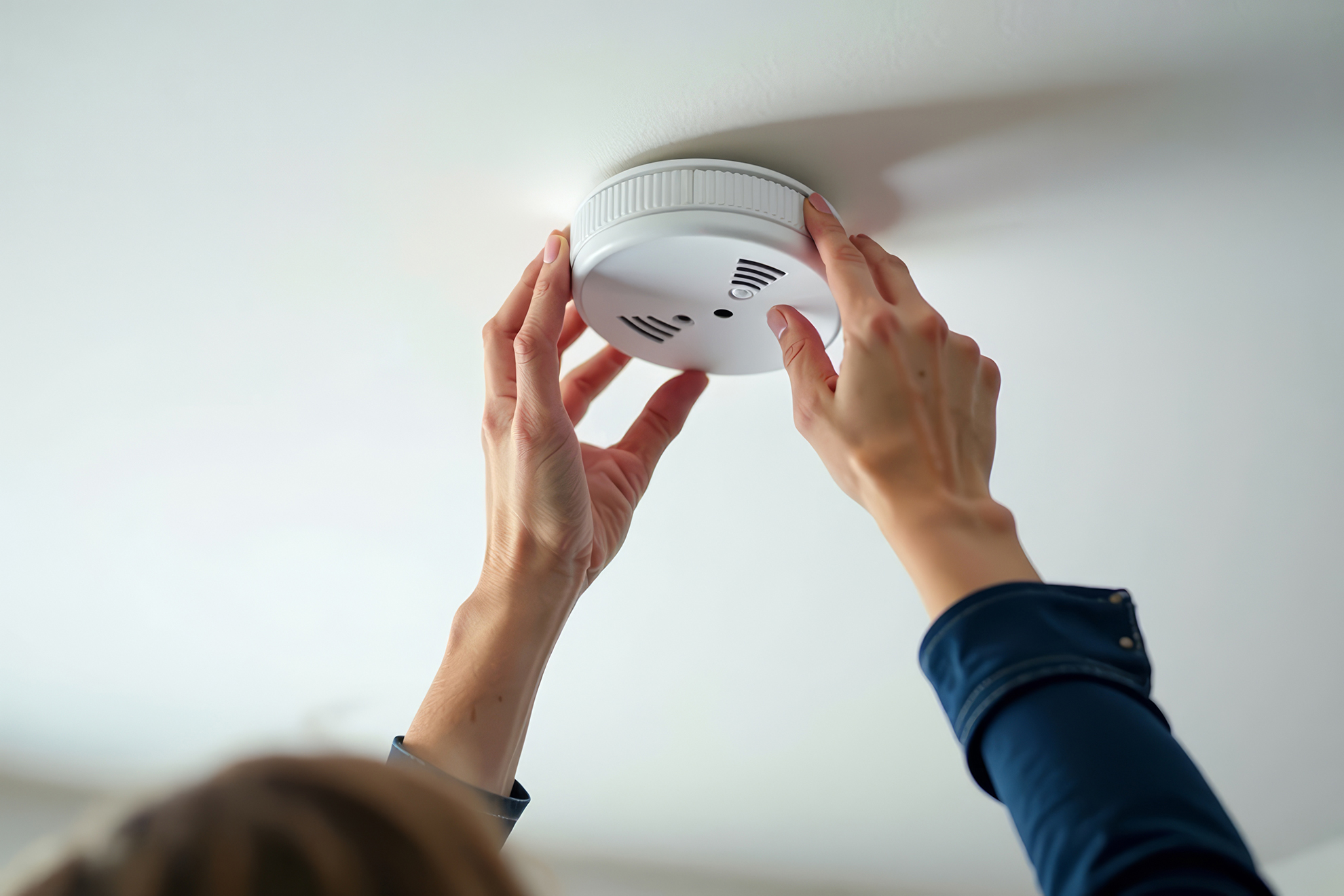
We moved on and noticed smoke detectors that were heavily coated in dust, located near HVAC outlets. It was evident that air filtration maintenance had not been carried out properly.
Again, the response:
“We’ll get the handyman to clean them.”
Further along, we observed a fire door with damaged laminate peeling at the bottom.
“We’ll sand it back and glue it down.”
Each comment, taken individually, might not seem alarming. But together, they painted a concerning picture; a pattern of informal repairs being applied to systems that are classified as essential life safety services.
These systems exist for a reason. They are designed, installed, and maintained under Australian Standards and the National Construction Code. Repairs often require qualified personnel, not only to complete the work but to ensure the system continues to perform as designed.
Fire doors, for example, are not simply doors. They are tested assemblies designed to maintain fire compartmentation. Modifying them without appropriate expertise can compromise their fire rating.
Emergency lighting is not simply lighting. It forms part of an evacuation system.
Smoke detectors are calibrated devices that rely on proper environmental conditions and maintenance.
Shortcuts in these areas create risk, sometimes invisible risk; but risk nonetheless.
The Real Issue
As the conversation progressed, the underlying expectation became clearer.
The building manager was hoping for a simplified process; minimal inspection, minimal documentation, and sign-off for the Annual Fire Safety Statement, while general maintenance was handled internally.
This is where responsible contractors must draw a clear line.
The Annual Fire Safety Statement is not a paperwork exercise. It is a declaration that essential services have been maintained and perform as required. It carries legal weight and significant responsibility.
Signing off without proper inspection or compliant maintenance is not just poor practice — it exposes everyone involved to risk.
The Bigger Picture
There is another aspect that is often overlooked: insurance and liability.
In the event of an incident, investigations typically examine maintenance records, defect logs, inspection reports, and communications between contractors and building representatives.
Professional service providers document their findings carefully. They record defects, provide recommendations, and track declined works. This documentation protects not only the contractor but also the building owner and occupants.
Without this structure, the situation becomes far more complex if something goes wrong.
Not All Building Managers Are the Same
It is important to say that this is not the norm. Many building managers and committees take compliance extremely seriously. They understand that maintenance is not simply a cost — it is a risk management strategy.
These clients often request additional documentation, demand compliance clarity, and proactively address defects. They understand that properly maintained systems protect both people and assets.
These are the buildings that operate more safely and with fewer surprises.
Final Thoughts
Shortcuts in essential services maintenance often begin with good intentions — saving money, simplifying processes, or managing budgets. But over time, these shortcuts can create gaps in compliance, gaps in maintenance, and ultimately gaps in safety.
Essential services exist to protect occupants during the moments when systems matter most.
When those moments arrive, there is no opportunity to correct shortcuts taken years earlier.
That is why compliance, documentation, and proper maintenance remain so important — not just for regulatory reasons, but for the safety of the people who live and work in these buildings every day.
Nigel Wraight
Performance Facility Management